Why Forcing 'One More Bite' Backfires on Picky Eaters
Quick Answer: Pressuring a child to take “one more bite” of a resisted food tends to increase the negative association with that food rather than build tolerance, since it turns a neutral eating moment into a conflict — research on feeding dynamics generally favors repeated, pressure-free exposure over direct pressure for actually expanding what a picky eater will eat.
The instinct to push for one more bite comes from a good place. The research on how food acceptance actually develops points in the opposite direction.

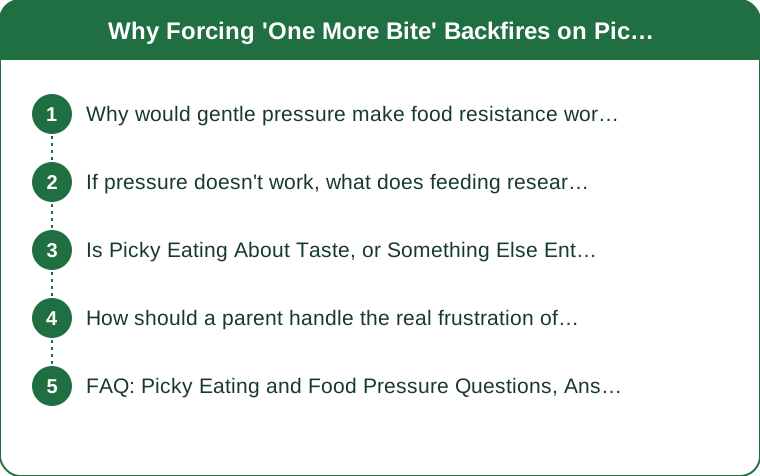
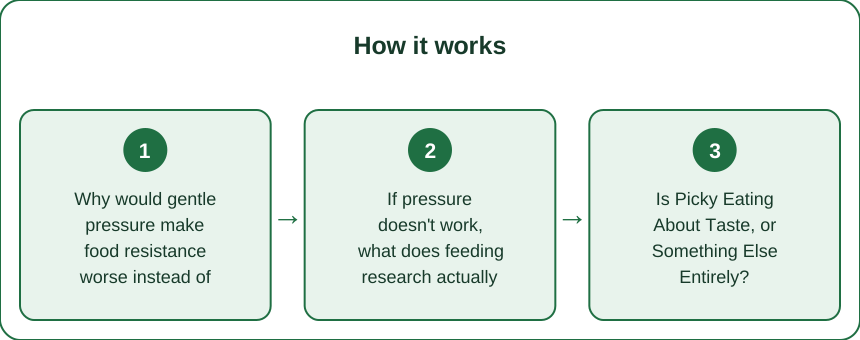
Why would gentle pressure make food resistance worse instead of better?
Pressuring a child to eat a specific food adds a stress and conflict association to that food, which research on feeding dynamics associates with reduced, not increased, long-term acceptance — the food becomes linked with an unpleasant interaction rather than a neutral or positive one.
This effect has been observed across multiple feeding studies looking at pressure-based versus exposure-based approaches, generally favoring the latter for actually expanding a picky eater’s accepted foods over time.
If pressure doesn’t work, what does feeding research actually support instead?
Repeated, low-pressure exposure — a resisted food appearing on the plate periodically without any expectation to eat it — is more consistently associated with eventual acceptance than direct pressure to eat it in a given sitting.
This process is typically slow, sometimes requiring a food to be offered ten or more times before a child accepts even a small taste, which is a very different timeline than the immediate result a one-more-bite approach is aiming for.

Is Picky Eating About Taste, or Something Else Entirely?
Texture, not taste, is a frequently underestimated driver of food refusal in many picky eaters, particularly children — a food rejected isn’t always about how it tastes, and addressing only flavor while ignoring texture sensitivity misses a meaningful part of the picture.
Recognizing texture sensitivity as a legitimate, common factor reframes some “stubborn” food refusal as a specific sensory response rather than simple resistance to try new things.
How should a parent handle the real frustration of preparing food that goes uneaten?
Separating the emotional frustration of wasted effort from the feeding strategy itself helps prevent that frustration from turning into the very pressure that research suggests backfires — the low-pressure approach can coexist with a parent’s legitimate feelings about the situation.
Involving a picky eater in food preparation, without pressure to eat the result, is another exposure method some feeding specialists suggest, building familiarity with a food outside the pressure of an actual mealtime.
FAQ: Picky Eating and Food Pressure Questions, Answered
Does this mean parents should never encourage trying new foods at all?
No — gentle, low-pressure encouragement (not forced bites) and repeated calm exposure are both still supported; the distinction is between pressure and simple, repeated opportunity.
How long should a parent expect this repeated-exposure approach to take?
It varies significantly by child, but feeding specialists often reference needing many repeated, low-pressure exposures before meaningful change, which is a longer timeline than most parents initially expect.
When does picky eating become something worth discussing with a pediatrician or feeding specialist?
If pickiness affects growth, nutrition, or expands to a very narrow range of accepted foods, it’s worth a professional evaluation rather than managing it alone indefinitely. This is general information, not medical advice.
TL;DR:
- Pressuring a child to eat a resisted food tends to build negative, not positive, food association
- Repeated, low-pressure exposure is more consistently linked to eventual food acceptance
- Texture, not just taste, is an underappreciated driver of picky eating in many children
- Involving kids in food prep without pressure is another supported, low-stakes exposure method
Letting go of the one-more-bite instinct isn’t giving up — the research suggests it’s actually the more effective long game for expanding what a picky eater eventually accepts. This is general information, not medical advice.
Keep Reading
This article is for general informational purposes only and is not medical advice. Always consult a qualified health professional for guidance specific to you.