Why Insisting on 'Just One More Bite' Usually Backfires With a Picky Eater Long-Term
Insisting on one more bite before a picky eater can leave the table often produces short-term compliance that looks like progress, but a substantial body of research on picky eating suggests that same pressure actually increases food-related anxiety over time, which works directly against the goal of getting a child to accept more foods.

Why Pressure Increases Anxiety Rather Than Acceptance
The mechanism: repeated-pressure-to-eat-a-specific-food-associates-that-food-with-stress-and-conflict-at-the-table-which-is-the-opposite-of-the-relaxed-association-that-actually-predicts-later-acceptance (repeated pressure to eat a specific food associating that food, over time, with stress and conflict at the table, which is essentially the opposite of the calm, low-stakes association that actually predicts a child accepting a new food later on, per the picky-eater-family-meals logic — repeated-pressure-to-eat-a-specific-food-associating-that-food-over-time-with-stress-and-conflict-at-the-table-which-is-the-opposite-of-the-calm-low-stakes-association-that-actually-predicts-later-acceptance), and the reframe (pressure building a negative emotional association exactly where a neutral or positive one was needed)).

Why Short-Term Compliance Masks the Long-Term Cost
The illusion: the-bite-actually-getting-eaten-in-the-moment-looks-like-a-successful-outcome-even-while-the-underlying-association-with-that-food-is-quietly-becoming-more-negative (the bite actually getting eaten in that specific moment looking like a clearly successful outcome to a watching parent, even while the underlying emotional association a child is forming with that food is quietly becoming more negative with each pressured instance, per the toddler-food-refusal-guide logic — the-bite-actually-getting-eaten-in-that-specific-moment-looking-like-a-clearly-successful-outcome-even-while-the-underlying-emotional-association-a-child-is-forming-with-that-food-is-quietly-becoming-more-negative), and the frame (a visible short-term win obscuring an invisible long-term cost building up underneath it)).
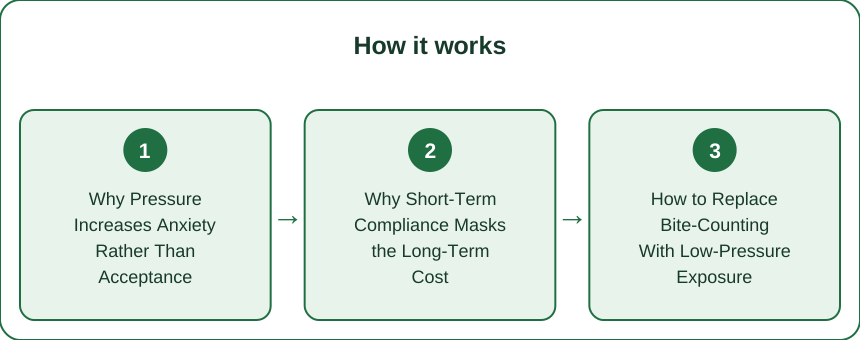
How to Replace Bite-Counting With Low-Pressure Exposure
The alternative: repeatedly-place-a-small-portion-of-the-food-on-the-plate-without-any-requirement-to-eat-it-letting-familiarity-build-through-exposure-alone-rather-than-through-a-forced-bite (repeatedly placing a small, low-stakes portion of the target food on the plate at meals without any requirement to actually eat it, letting basic familiarity build through simple repeated exposure alone, rather than trying to force acceptance through a pressured bite each time, per the trying-new-foods-strategy-guide logic — repeatedly-placing-a-small-low-stakes-portion-of-the-target-food-on-the-plate-at-meals-without-any-requirement-to-actually-eat-it-letting-basic-familiarity-build-through-simple-repeated-exposure-alone-rather-than-a-pressured-bite), and the frame (exposure without pressure being the actual mechanism that research points to for eventual acceptance).
Repeated pressure to eat a specific food associates that food, over time, with stress and conflict at the table, which is the opposite of the calm, low-stakes association that actually predicts a child accepting it later, even though the bite getting eaten in the moment looks like a clearly successful outcome while the underlying association is quietly becoming more negative. Repeatedly placing a small portion of the target food on the plate without any requirement to eat it, letting familiarity build through simple repeated exposure rather than a pressured bite, is the approach the research actually points to for eventual acceptance.
Keep Reading
This article is for general informational purposes only and is not medical advice. Always consult a qualified health professional for guidance specific to you.