When Your Toddler Suddenly Refuses Everything: The Food-Strike Survival Guide
The toddler who ate everything at one suddenly eats nothing at two — the food strike that panics parents is a documented developmental phase with an evidence-backed playbook, and the counterintuitive core is: pressure makes it worse. The survival guide.

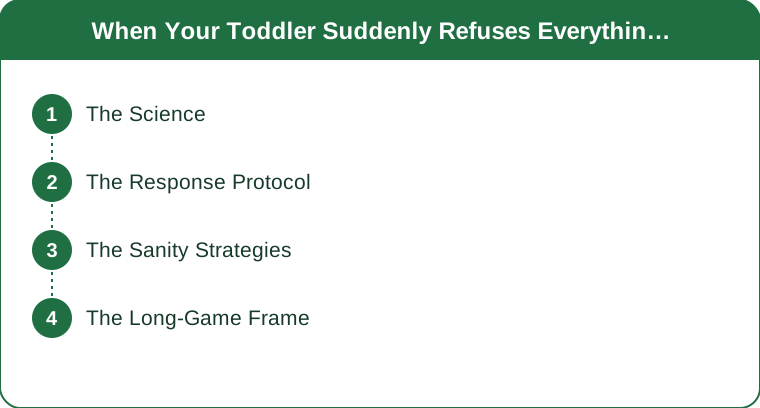
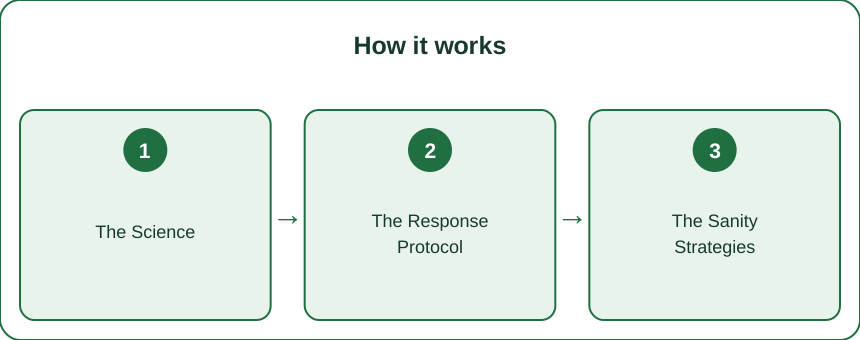
The Science
Why toddlers strike: the neophobia timeline (the food wariness peaking around ages two-to-three — the evolutionary logic: the newly-mobile toddler who didn’t eat random berries survived; the phase being programmed, not produced by your cooking), the growth-rate truth (the toddler growth slowing dramatically after year one — the appetite dropping to match; the ‘eating less than as a baby’ being arithmetic, not alarm), the control-development angle (the food refusal as the toddler’s first sovereignty project — the ‘no’ being about autonomy more than flavor per the development doctrine), the intake-averaging reality (the toddlers self-regulating across DAYS not meals — the nothing-Tuesday balanced by everything-Thursday; the weekly lens from the research), and the when-to-worry list (the weight-curve drops, the shrinking food list under 15-20 items, the texture-and-gagging patterns, the mealtime distress — the pediatrician-and-feeding-therapist tier; the phase-versus-problem distinction that professionals sort).
The Response Protocol
The evidence-backed playbook: the division of responsibility (the parent deciding WHAT-WHEN-WHERE, the child deciding WHETHER-and-HOW-MUCH — the Satter framework that underpins everything; the roles that end the battle by ending the war), the pressure ban (the bribes, praise-for-bites and clean-plate pushes all backfiring in the research — the pressured foods becoming LESS liked; the one-more-bite economy abolished), the exposure patience (the 10-to-15 neutral exposures before acceptance being normal — the serve-it-anyway persistence without commentary; the rejected broccoli reappearing casually next week per the exposure doctrine), the safe-food anchor (the meal always containing ONE accepted food — the bread-or-rice insurance that keeps the table calm; the child who can fill up on the safe food while the new food just… sits there, being seen), the family-style serving (the serve-yourself bowls that hand over control — the tong-and-spoon autonomy that converts refusers per the control doctrine), and the modeling power (the parents eating the food happily WITHOUT selling it — the caught-not-taught vegetables from the modeling doctrine).

The Sanity Strategies
Protecting the parent: the deep-breath economics (the strike outlasting the parent who fights it — the calm that’s strategy, not saintliness; the emotional-investment withdrawal from each meal’s outcome), the short-order-cook boundary (the one-meal-for-everyone rule with the safe-food accommodation — the separate-meals treadmill declined kindly per the boundary doctrine), the snack-schedule structure (the grazing that kills dinner appetite — the two-snacks-max eating schedule from the routine doctrine; the hungry-enough child being half the battle), the milk-and-juice audit (the liquid calories that replace meals — the cup-with-meals-water-between standard), the partner-and-grandparent alignment (the household’s united protocol — the grandma’s cookie diplomacy negotiated per the family doctrine), the documentation option (the week’s actual intake logged once — the data that usually reassures; the pediatrician visit armed with facts, not fears), and the perspective anchor (the college student who eats salad having once been a beige-food toddler — the phase’s near-universal resolution; the long game from the family-food doctrine).
The Long-Game Frame
Playing for years, not meals: the food-relationship stakes (the pressure-free table building the adult relationship with food — the emotional-eating and diet-cycle prevention starting here per the food-peace doctrine), the involvement ladder (the toddler-appropriate participation — the washing, stirring and garden-picking that build ownership per the involvement doctrine; the grown-it eaten at double rates), the fun-without-pressure tier (the shapes, dips and DIY-assembly meals that lower stakes — the play that serves exposure; the dip being the toddler’s gateway condiment), the wins redefined (the new food TOUCHED being progress — the licked, the on-the-plate-without-protest; the acceptance ladder honored per the exposure doctrine), the self-compassion note (the fed-is-best days with the beige dinner being fine parenting — the perfect-table myth retired; the relationship mattering more than any meal), and the closing reassurance (the strike as a phase with an exit — survived by structure, patience and low stakes; the parent who stops fighting winning by default; the table kept peaceful, which was always the real recipe). Serve it neutrally, anchor a safe food, quit the bite-count: the strike, outlasted.
Toddler food strikes are programmed development, not your cooking — hold the division of responsibility (you choose what/when, they choose whether/how much), ban pressure, keep one safe food per meal and count exposures in the dozens. Worry only at weight drops or sub-15-food lists.
Keep Reading
This article is for general informational purposes only and is not medical advice. Always consult a qualified health professional for guidance specific to you.