Feeding Picky Eaters Without Losing Your Mind (or Cooking Four Dinners)
Every parent of a picky eater knows the war’s geography: the negotiated bites, the rejected casserole that was a favorite last Tuesday, the beige-food fortress, the quiet 7pm despair of cooking for people who eat like tiny food critics with tenure. Here is the liberation: pediatric feeding science actually has answers — and nearly all of them involve you doing less, not more. No more short-order cooking, no more bite-counting. Here is the evidence-based armistice. (Extreme pickiness that shrinks diets below ~20 foods or affects growth deserves a pediatrician and feeding-therapy conversation — that is a different, treatable situation.)

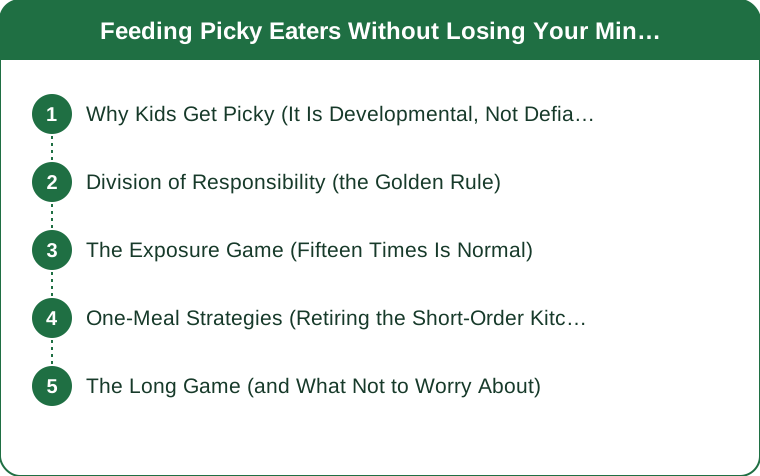
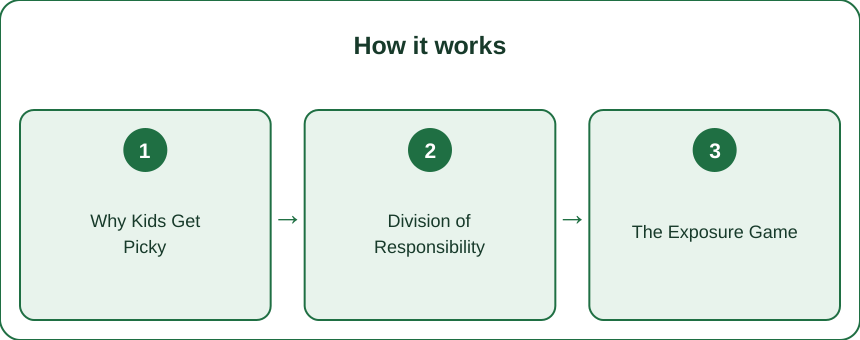
Why Kids Get Picky (It Is Developmental, Not Defiance)
The reassuring science: picky eating peaks between ages 2 and 6 by design — food neophobia (suspicion of new foods) is a documented developmental phase with plausible evolutionary logic (toddlers who ate random plants did not become ancestors), taste buds genuinely differ (children have more, and bitterness reads louder — the broccoli complaint has hardware behind it), and appetite swings with growth spurts, making the ate-nothing-Tuesday usually meaningless. Translation: your child’s pickiness is neither your cooking’s verdict nor their character flaw. It is a phase with a playbook — and the playbook’s first rule is lowering the temperature at the table.
Division of Responsibility (the Golden Rule)
The framework pediatric feeding experts have endorsed for decades — Ellyn Satter’s division of responsibility: parents decide what food is served, when and where; children decide whether they eat and how much. Full stop. This means: serve the family meal including at least one thing the child reliably eats (the safe-food anchor — usually bread, rice or fruit), then genuinely release the outcome — no pressure, no bribes, no one-more-bite negotiations, no dessert-as-ransom (which research shows teaches kids that vegetables are the toll and sweets are the prize, entrenching both). Pressure demonstrably backfires; autonomy demonstrably works. The hardest part is that it feels like doing nothing. It is actually doing the thing.

The Exposure Game (Fifteen Times Is Normal)
The patience science: research shows children may need 10–15+ neutral exposures to a new food before acceptance — where exposure means seeing, smelling, touching or having it on the table, not eating it. Most parents quit at three rejections and declare the child hates it forever. The playbook: keep serving the rejected food in small no-comment portions alongside safe foods, let the child interact without eating (poking counts as progress — genuinely), model eating it yourself with visible unperformed enjoyment, and involve them upstream — kids who help wash, stir or garden a vegetable eat it at dramatically higher rates (the ownership effect every school-garden study confirms). Exposure is a numbers game. Play the long season.
One-Meal Strategies (Retiring the Short-Order Kitchen)
The tactical middle ground between four dinners and dinner wars: deconstructed meals (taco night, bowl night, DIY pizza — the family eats the same components, assembled by preference; the picky plate is just sparser), the rotation with anchors (every dinner includes one safe carb and one safe protein alongside the new-or-rejected items — the child can always eat something without a special order), bridge foods (extend from accepted foods by tiny steps: chicken nugget → homemade breaded chicken → plain grilled strip), and sauce sovereignty (dips transform vegetable acceptance — ranch, hummus and ketchup are exposure tools, not failures). The kitchen serves one meal with options, not four meals with resentment. That sentence, repeated calmly, is the whole policy.
The Long Game (and What Not to Worry About)
The perspective section: judge nutrition by the week, not the meal (children self-balance across days remarkably well when the offerings are sound — the all-bread Tuesday and the fruit-only Thursday usually average out), growth curves outrank plate reports (the pediatrician’s chart is the actual scoreboard), most picky eaters broaden naturally through late childhood — especially unpressured ones (the peer effect of school lunches does free exposure work), and your own modeled eating is the longest lever: kids raised watching relaxed adults eat varied food inherit the relationship more than the menu. The dinner table’s real curriculum was never tonight’s broccoli. It was food as a calm, pleasant, non-negotiated part of family life — served nightly, pressure-free, for years. That meal, every picky eater eventually eats.
Picky eating, armistice edition: it is a developmental phase, you own the menu and they own their appetite, exposure needs fifteen patient reruns, one meal with anchors replaces the short-order kitchen, and the week — not the meal — is the scoreboard. Tonight: serve dinner with one safe food, say nothing heroic, and let the science work. The war ends when one side calmly stops fighting. Be that side. The broccoli can wait fifteen more tries.
Keep Reading
This article is for general informational purposes only and is not medical advice. Always consult a qualified health professional for guidance specific to you.